Honduras' North Coast, A Jewel
Friday, 13 January 2012 07:10
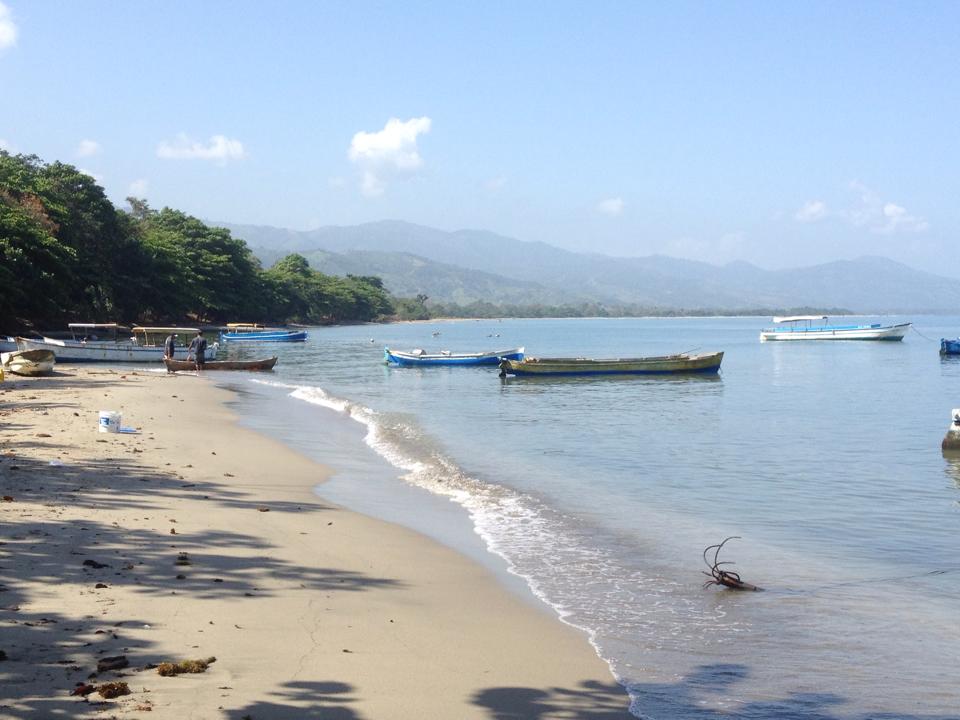
The landscape with its jungles, rivers, and waterfalls is breathtaking; the beaches are endless and devoid of sun worshipping crowds; the history is fascinating; and the numerous Garifuna villages that dot the shoreline remain some of the most authentic and picturesque places in the country.
By Kimberley Player
"I’m leaving Roatán to explore the north coast of the mainland.” This statement caused a bit of a stir amongst my island acquaintances. “You’re leaving Roatán? Why? For the mainland? Don’t you know it’s not nearly as nice or safe over there?” Maybe this was true; maybe it wasn’t, but I needed a change of scenery. I needed to get away from the concentrated tourist environment of Roatán, from the hordes of cruise shippers and expat residents and the feeling that I’d been dropped into a Canadian province, albeit one that more resembled Margaritaville than my home country’s more stereotypical snowy vistas. The bottom line was that my current surroundings, while unquestionably gorgeous and fun, were nothing like the Honduras that I had originally come to Central America to see.
Truth be told, it was my background in economic and resort development that led to my interest in the north coast, specifically the stretch of land from Trujillo through La Ceiba to Tela. I had read about lofty plans to transform this region into a major tourist destination through massive public and private investment in infrastructure and of course, real estate. In my experience, such development too often changes untouched (or underutilized, depending on your viewpoint) places forever and I wanted to see the north coast before the inevitable occurred.
And I was not disappointed, although I suppose if I had been looking for a prepackaged 5-star experience complete with high end hotels and Americanized amenities, I would have been. But the north coast of Honduras truly is a jewel or, as the Honduras Ministry of Tourism puts it, an area of “natural resources and cultural assets that endow the coast with a tourism potential that is unique in the region”. The landscape with its jungles, rivers, and waterfalls is breathtaking; the beaches are endless and devoid of sun worshipping crowds; the history is fascinating; and the numerous Garifuna villages that dot the shoreline remain some of the most authentic and picturesque places in the country. On the other hand, it’s true that the roads are challenging by Western standards and that the infrastructure in general needs significant improvement. It’s also true that the region’s many varied attractions are poorly defined and not properly marketed, particularly to an international audience.
Trujillo itself is a sleepy little town with few tourists but a whole lot of character. It’s also slated to be the site of Honduras’ first mainland cruise ship port, currently under construction with completion of both the terminal and an oceanfront shopping center and transportation hub slated for the 2012-13 cruise season. Proponents of the development often point to Roatán as an example of the economic benefits associated with cruise ship business. However, they also tend to ignore the realities of the strain on the island’s environment, infrastructure, and people, as well as the fact that despite large traveler numbers, the aforementioned benefits typically remain limited to a few local tours, a meal here and there, and perhaps the purchase of a piece of local jewelry or a t-shirt.
The benefits of increases in real estate values are also touted. Unfortunately, the people that stand most to gain from this phenomenon are not the locals who, if history repeats itself, will end up selling off their properties to foreigners, but outside investors who have already been sold on cheap land and the prospect of living like kings in the "Richest Poorest Country in the World". Perhaps the most famous (or infamous) projects claiming to offer early investment opportunities in “the next Roatán” belong to a Canadian developer dubbed “the porn king” by some in reference to his past career in adult store chains. Hundreds of home sites, some of which are located on land claimed by local Garifuna communities, are being sold almost exclusively to Canadians. The majority have bought without ever setting foot in Honduras, with the end goal being appreciation of their new offshore assets.
Plans for Tela are even bigger, with one of Honduras’ largest ever tourism-related public-private partnerships focused on the creation of Tela Bay or as it’s also known, the Micos Beach and Golf Resort. This project is projected to eventually consist of 4- and 5-star hotels, an 18-hole golf course, golf and beach clubs, shopping areas, and 300-400 villas. Like some of the Trujillo developments, it has a controversial background, particularly on the Garifuna land claim front. It has also been suggested that planned wetland filling will significantly damage the environment. While the government and major lenders, most notably the Inter-American Development Bank have highlighted the need for a “policy framework for the strategic development and sustainable management of regional assets that will ensure a course of environmentally sustainable and socially equitable growth”, we can only hope that such ideals become accountable standards to which key stakeholders, particularly private sector developers, are held.
La Ceiba, it is worth noting, is pursuing a more sustainable and diverse tourism development strategy for which key players such as CANATURH, RECOTURH and the local Camara de Turismo de La Ceiba should be applauded. Granted the economic fundamentals of Honduras’ third largest city are significantly different from both Trujillo and Tela; however, lessons can be learned from La Ceiba’s focus on organic growth, historic preservation, and evolution of tourism product outside of traditional sun and beach options.
I love Roatán, but does Honduras need to create “the next Roatán” on its north coast? Please no. Please don’t copy the development path of a Caribbean island that has made its own mistakes in managing tourism and its impact on land use, the environment, and its people. Do showcase your beauty and natural resources to the world, but ensure that you have a system in place to retain them. Do create jobs and improve the quality of life for locals, but understand and mitigate the negative impacts of turning your backyard into a playground for extranjeros. I wish all the best for this beautiful and still relatively untouched part of Honduras and hope that it can truly be developed in a sustainable manner, one that benefits not just a wealthy few, but its people and land first and foremost. (1/13/12) (photo courtesy Internet)
Note: The author is an economic and real estate development consultant who is travelling in Central America while researching the impact of tourism on land use.
